
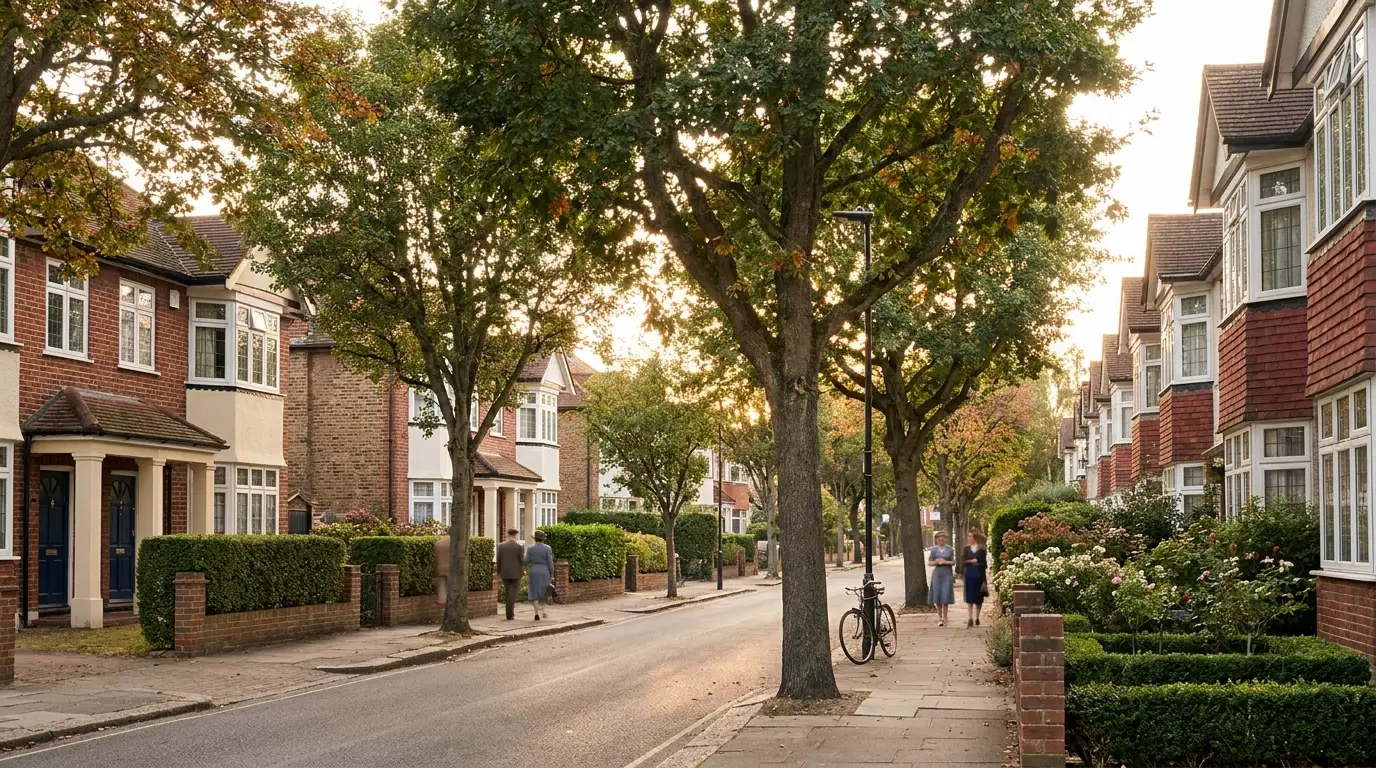
If you live in Hornchurch and you're weighing up a move, the question underneath all the headlines is usually simple: is this a good place, and a good time, to sell? Here's an honest, jargon-free look at what actually drives the RM11 and RM12 market, who's buying and renting, and how to read it sensibly before you commit.
Why Hornchurch and Havering keep their appeal
A lot of what makes this corner of east London and the Essex border desirable doesn't change much from year to year. That's the kind of demand worth paying attention to, because it tends to hold up whatever the wider market is doing.
- Genuine value compared with inner London. For the same money, you generally get more space, more garden and a quieter street than you would closer in. That trade-off is the single biggest reason people move out this way.
- Real green space. Hornchurch Country Park, on the former RAF Hornchurch airfield, sits at the southern edge of the area, and Havering has a genuine band of green belt and country parks to the north. For families and dog walkers, that matters.
- A working high street. Hornchurch High Street still has independent shops, cafes and everyday amenities, with the Queen's Theatre on nearby Billet Lane — all within walking distance of a lot of homes, which isn't something every commuter town can say.
- A settled community. This is a neighbourly part of London where people put down roots and stay. That continuity is part of what keeps demand steady.
The transport picture (the part that moves prices)
Connectivity is the factor that most reliably underpins demand across Havering, and there are three distinct ways into town from this area.
- District line in the heart of RM11/RM12. Elm Park, Hornchurch and Upminster Bridge all sit on the District line in Zone 6, with Upminster as the line's eastern terminus. It's a direct, no-changes route across central London — slower than a fast train, but you usually get a seat and a simple commute.
- The Elizabeth line nearby. Romford, Gidea Park and Harold Wood are all Elizabeth line stops, running through to Liverpool Street, the City, the West End and on to Paddington and Heathrow. For many Hornchurch residents, a short hop or drive to one of these stations has reshaped what a realistic commute looks like.
- c2c from Upminster. Upminster is also on the c2c line into London Fenchurch Street, the quickest mainline route for City and Docklands workers.
Three separate rail options into London is unusual — and it's a big part of why demand here stays steady.
When you're judging a specific street, walking time to the right station for your commute often matters more than the postcode itself.
Schools, space and who's actually buying
Demand in Hornchurch isn't one single group of people — it's a mix, and that's healthy for a market.
- Families trading up. Buyers leaving smaller flats nearer central London come here for a house, a garden and access to well-regarded local schools. Catchment and school reputation genuinely shift demand street by street, so it's always worth checking the current position rather than relying on what was true a few years ago.
- First-time buyers. The relative value versus inner London makes RM12 and the wider Havering area a realistic step onto the ladder, especially within walking distance of a station.
- Downsizers staying local. Plenty of longtime residents want to release equity but stay near family, friends and the high street they know.
- Renters and landlords. Lettings demand is steady, driven by commuters and people who want to live in the area before they buy. If you're a landlord, that depth of demand is reassuring — just be aware of your obligations, more on which below.
How to read the local market sensibly
National property headlines are a blunt instrument. What happens in your road in RM11 can look nothing like the average for England, or even for London. A few principles help you read it properly.
- Local beats national. A two-bed terrace near Hornchurch station and a four-bed in a quieter part of Emerson Park are effectively different markets. Judge yours, not the country's.
- Watch the right signals. How quickly comparable homes go under offer, how many viewings well-presented properties attract, and whether asking prices are being achieved tell you far more than any single index.
- Price it right from day one. The most common reason a sale stalls isn't the market — it's an over-ambitious starting price. Homes that launch sensibly tend to attract more interest early, which is exactly when buyer attention is highest.
- Think about your chain. If you're buying and selling, the strength and length of the chain often affects your move more than small swings in price. A realistic, well-managed chain beats a slightly higher offer that's likely to collapse.
If you're a landlord, know the compliance basics
Lettings demand here is solid, but the rules are real and worth getting right. As things stand, every privately rented home in England must have an EPC rating of at least E to be let. The government has confirmed that this minimum will rise to C for privately rented homes from 1 October 2030, so it's sensible to factor energy efficiency into your plans now rather than be caught out later. You'll also need a current gas safety record where there's gas (renewed every year), an electrical safety check (an EICR, at least every five years), and working smoke and carbon monoxide alarms. If any of that feels like a maze, it's exactly the kind of thing a local agent should handle for you. You can see how we work with landlords on our landlord fees page.
What to do next
The honest answer to "is it a good time to sell in Hornchurch?" is that it depends far more on your own street, your home and your reasons for moving than on any national headline. The best first step is simply to get a clear, no-pressure read on what your property is worth today. You can book a free valuation with one local person who'll handle your whole move from start to finish — or just call us on 0203 583 1311 for a friendly chat, in English or Lithuanian, with no obligation either way.