
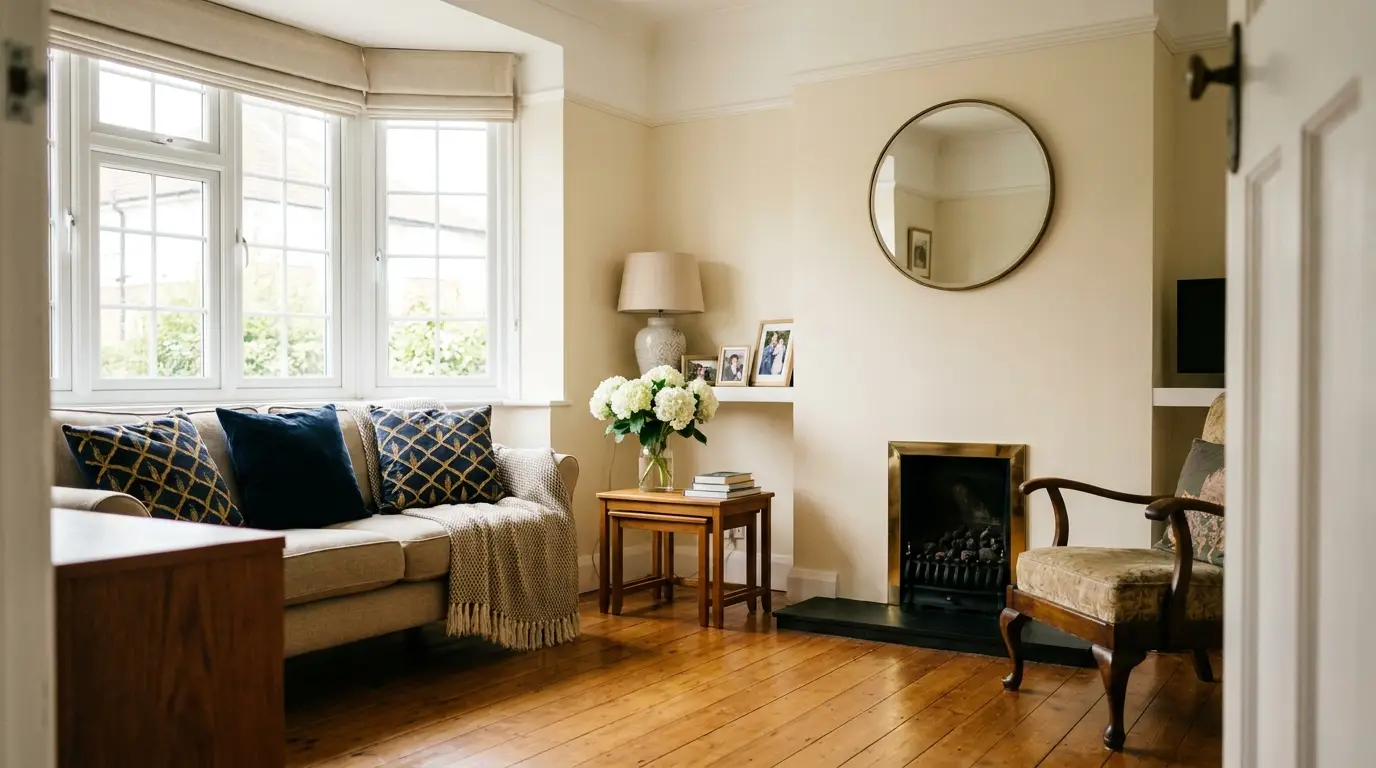
You've booked a valuation and now you're wondering whether you need to repaint the hallway, deep-clean the oven, or apologise for the spare room. The honest answer: far less than you think. A good valuer is trained to see past the clutter, but a little preparation still helps, and it puts you in control of the conversation.
Here's what actually makes a difference when you're selling in Hornchurch, Emerson Park or anywhere across Havering, and what you can safely ignore.
What a valuer is really looking at
A valuation isn't a judgement on your housekeeping. When one of our local team visits, we're forming a view on what a buyer will realistically pay, and that comes down to a handful of things, most of which you can't change in an afternoon:
- Location and position — the street, the local schools, how easily you can reach Hornchurch station on the District line, and how the property sits relative to its neighbours.
- Size and layout — usable floor space, number of bedrooms, and whether the rooms flow sensibly.
- Condition and age — the roof, windows, heating and general upkeep, set against how much a buyer would need to spend.
- Light and outlook — bright, airy rooms consistently feel more valuable than dark ones.
- Recent comparable sales — what genuinely similar homes nearby have sold for, not what they were listed at.
None of that requires a renovation. It just means showing your home honestly and at its best.
What genuinely helps
If you have a weekend before the appointment, spend it on the things buyers respond to, because the valuer is reading the property the way a buyer will.
First impressions and kerb appeal
The front of your home sets the tone before anyone steps inside. A tidy path, a clear front door, weeded beds and bins out of sight do more than any single room upgrade. It costs almost nothing and signals a home that's been looked after.
Light
Open every curtain and blind, clean the windows, and switch lamps on if it's a grey day. Light is the cheapest improvement there is. Swapping a dim bulb for a brighter, warm-white one in a gloomy room genuinely changes how the space feels.
Declutter, don't redecorate
Clear surfaces, tidy worktops and a bit of breathing space make rooms read as larger. You're not aiming for a show home, you're helping people picture their own life there. Box up the excess, but don't strip the place of all personality.
Small repairs that say "well looked after"
- The dripping tap, the sticking door, the cracked tile, the blown bulb.
- A fresh bead of sealant around the bath or sink.
- Touching up scuffed skirting or a tired patch of wall in a neutral colour.
Individually these are tiny. Together they tell a buyer there are no nasty surprises waiting, which protects your price.
A home that feels cared for sells for more than an identical one that doesn't, and that feeling is mostly free to create.
What does NOT pay back
This is where sellers often spend money they didn't need to. Big, expensive jobs rarely return what they cost when you're about to sell, and some actively put buyers off.
- A brand-new kitchen or bathroom fitted purely to sell. You'll rarely recoup the full cost, and your taste may not match the buyer's. A clean, tidy existing kitchen usually serves you better.
- Bold or highly personal makeovers — statement wallpaper, themed rooms, unusual colour schemes. They narrow your audience rather than widen it.
- Anything that masks a problem rather than fixing it. Damp painted over, or a fault tucked out of sight, tends to surface during the buyer's survey, and then it costs you trust and time, not just money.
- Luxury extras with narrow appeal — high-cost features that only suit one type of buyer.
If a job needs doing for your own comfort, that's a different decision. But don't spend thousands on the assumption it lifts your sale price, because it usually doesn't.
Get your paperwork ready
This is the part most sellers forget, and the part a good agent will thank you for. Having your documents to hand makes the whole move smoother and helps us market the property accurately from day one.
- EPC (Energy Performance Certificate). By law you need a valid EPC before your home can be marketed for sale in England. An EPC lasts ten years, so check whether you already have a current one before paying for another. Reassuringly, there's no minimum energy rating required to sell a home, that rule applies to rented properties, not sales.
- Proof of any works — building regulations sign-off, FENSA or equivalent certificates for replacement windows and doors, gas and electrical safety paperwork, and warranties or guarantees for things like a new boiler, roof, damp treatment or extension.
- Leasehold documents, if you own a flat. Your buyer's solicitor will need a management pack covering the lease, service charges, ground rent, building insurance and any planned major works. These packs can take several weeks to come back from the managing agent, so ordering yours early is one of the simplest ways to avoid a delay later in the chain.
- Material information. Portals now expect accurate details on tenure, council tax band, parking, utilities and anything else that materially affects the property. The more you can confirm up front, the cleaner your listing, and the fewer questions stall a sale.
On the day: relax, and ask questions
A valuation should feel like a friendly conversation, not an exam. Open up the rooms, let the light in, and be honest about anything you know needs attention. It helps us price realistically and represent you properly to buyers.
It's also your chance to ask the questions that matter to you: what similar homes nearby are actually selling for, how long things are taking to sell at the moment, and what the next steps look like. A wildly high figure with no explanation behind it isn't doing you any favours, you want a number you can stand behind.
And if Lithuanian is your first language, just say so. We're happy to talk it through in English or Lithuanian, whichever feels easier.
What to do next
Don't overthink it. Tidy up, let the light in, dig out your EPC and any warranties, and leave the rest to a conversation. When you're ready, book a free valuation with one local person who'll handle your whole move from start to finish, or just call us on 0203 583 1311 and ask. No pressure, no call centre, no being passed around.