
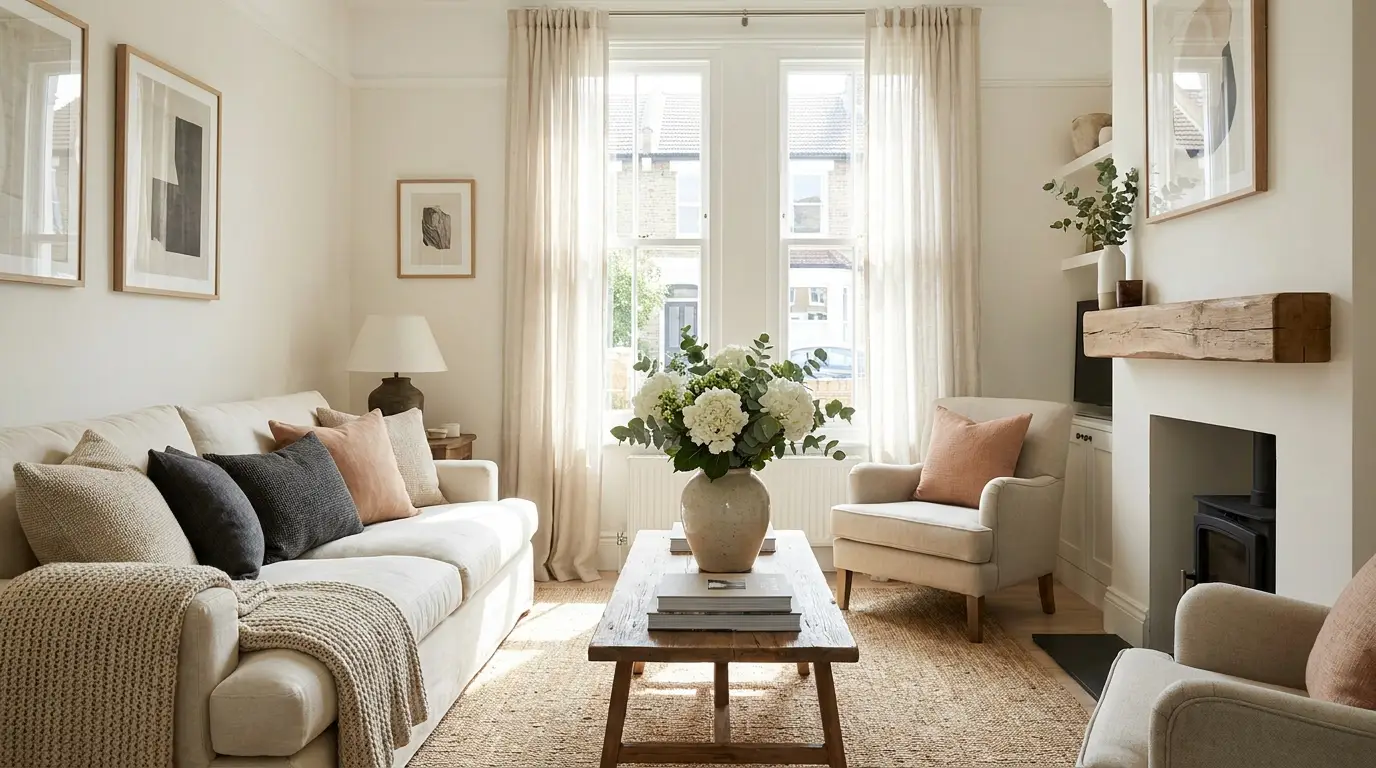
When you're selling a home, first impressions count for a staggering amount. A buyer often makes up their mind within the first 90 seconds — “I could live here” or “this isn't for me”. The good news is that you can shape that impression deliberately, and it doesn't take a fortune. In this article I've gathered the practical agent's tricks for preparing a home on a budget, so that it looks more valuable and sells closer to the asking price.
One thing is worth understanding: you're not rebuilding the house — you're managing an emotion. A tidy, bright and neutral home tells the buyer “everything here is well looked after”, while a cluttered or dark one says “this is going to need a lot of work and money”. That quiet sum the buyer does in their head translates directly into the size of the offer.
The first impression starts outside
A buyer sees the outside of the house before any room inside. Faded front doors, dirty windows or a cluttered front garden plant the thought “this will need investment” straight away. Happily, the exterior is the cheapest and quickest thing to put right.
- The front door. A fresh coat of paint, a clean handle and a tidy letterbox cost pennies, yet the effect is out of all proportion to the spend.
- Windows and clean glass. Washed windows instantly add that “cared-for home” feeling.
- Garden and path. Mow the lawn, move the bins out of sight, tidy the path. A few plants and a new doormat do more than you'd expect.
Before your first viewing, walk up to your own home as though you were seeing it for the first time. Stop at the gate and ask yourself: would I want to go in? The first three seconds from the street often outweigh the entire rest of the viewing.
Cleanliness and smell — the invisible salesman
A buyer judges smell subconsciously, but very powerfully. The smell of cigarettes, damp or pets automatically becomes a thought about extra expense — and sometimes an offer knocked down by a few thousand pounds.
- Air the place out — open up every room before each viewing.
- Don't overdo the air fresheners. An overpowering scent looks like an attempt to hide something, and the buyer grows suspicious. Far better to have clean bedding, fresh flowers or a light, natural fragrance.
- Invest in a professional clean. The kitchen, bathroom and floors should gleam. A clean before viewings costs a few hundred pounds, but it often adds thousands to the final price.
A sense of space and light
Overcrowded rooms look smaller, and dark spaces look gloomy — even when they're actually generous. Two simple steps change everything.
- Less is more. Remove the surplus furniture and leave only the essentials. If need be, temporary storage costs less than a lost buyer.
- Let the light in. Pull back the curtains, fit brighter bulbs, switch on the lamps. Natural light always brings out the best in a space.
- Mirrors. A well-placed mirror visually opens up a narrow hallway or room.
You're not rebuilding the house — you're managing an emotion. The buyer has to leave that first viewing with a good feeling, and then half the negotiation is already won.
A neutral feel the buyer can see themselves in
The buyer needs to picture their own life in the home, not yours. So personal items — family photos, collections, religious symbols — are best tucked away. The same goes for colour: bold shades appeal to few people, whereas white, sand or light grey suit almost everyone and let the buyer mentally “fit” the home around themselves.
This is called staging — presenting a space deliberately for sale. It isn't a trick; it simply helps the buyer see the home's potential.
Prepare the key rooms strategically
The kitchen — the heart of the home
Buyers give the kitchen the most attention. Even if it's dated, cleanliness and order work wonders: clean the oven, leave the worktops clear, put out a bowl of fresh fruit or some flowers.
The bathroom — the cleanliness barometer
Here even small flaws look big. Replace the shower curtain, clear the limescale, see to fresh towels and a pleasant smell.
The bedroom — a place to rest
It should feel cosy yet spacious: a neatly made bed, neutral colours and minimal decoration.
Common mistakes worth avoiding
- A cluttered interior. The more stuff there is, the less space there seems to be.
- A bad smell. The smell of cigarettes alone can shave a few thousand off the price.
- A tense atmosphere during the viewing. If the owner or agent seems on edge, it rubs off on the buyer. It's best to let the buyer spend a calm moment in a room on their own.
- Too much “show”. Overpowering scents or curtains drawn everywhere look as though something is being hidden — and the buyer starts hunting for faults.
- An expensive renovation right before selling. A new kitchen or bathroom rarely pays for itself in full, because the buyer will still want to adapt the home to their own taste.
An example from practice
A flat in London was on the market at £350,000 and sat there for three months without a single offer. The owners repainted the walls in neutral colours, cleared out half the furniture and booked a professional photographer. In the first week after the relaunched listing they received three offers, and the home sold for £345,000 — just £5,000 below the asking price. Without those simple changes it would most likely have sold for even less, after several more months of waiting.
Before the marketing begins we walk round the home with you and draw up a concrete staging plan: what genuinely needs sorting, what to leave alone, and which low-cost jobs give the most return. After that we take care of professional photography and presentation, so the home looks its best online from day one.
A quick checklist before viewings
- Outside: clean façade, clean windows, a tidy garden.
- Inside: aired out, clean, neutral, bright.
- Space: less furniture, fewer personal items.
- Key rooms: the kitchen and bathroom should gleam.
Once the home is ready, the next step is how to present it online: professional photography and a virtual tour →. And if you're weighing up bigger work, first read which renovation before selling genuinely pays off →. You'll find all the articles in the guides.