
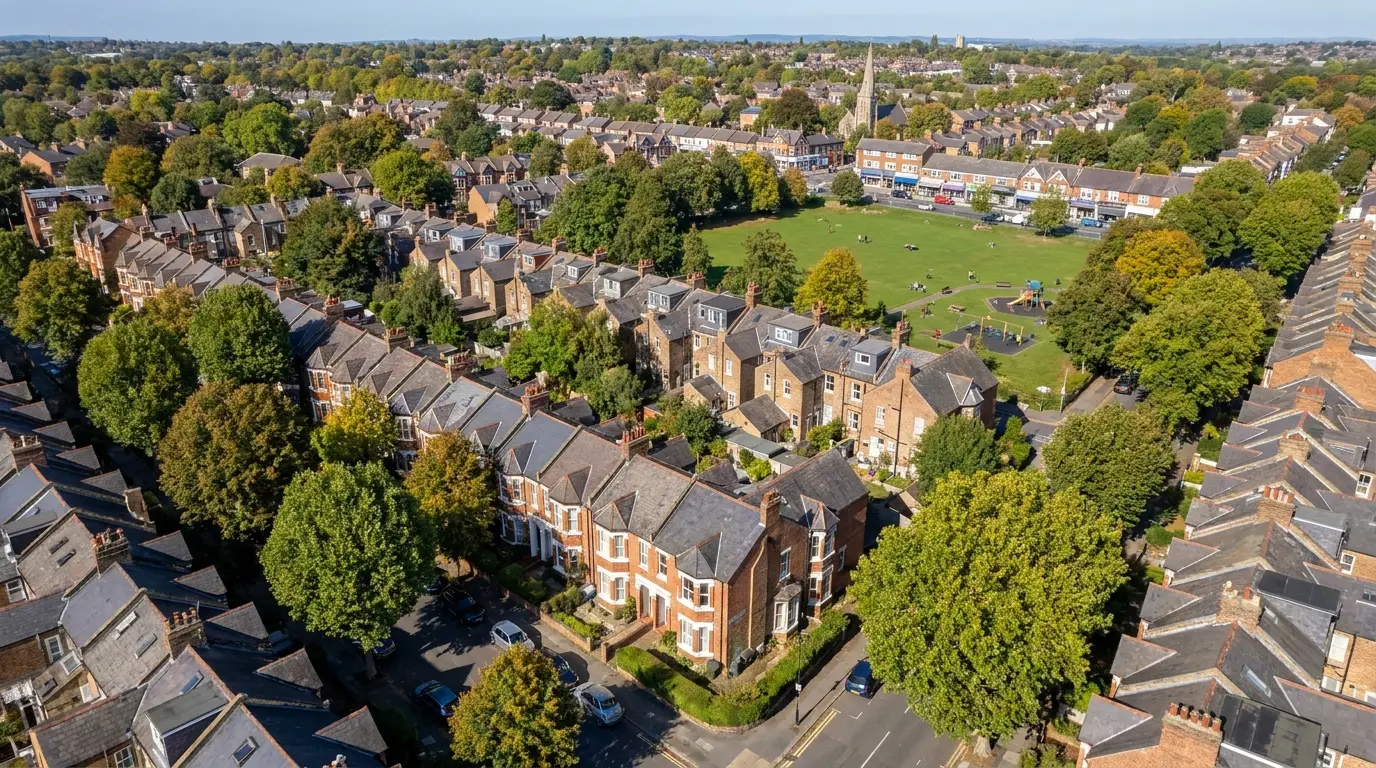
When buying a home, most people look at the house first: how many bedrooms, what condition it's in, whether the price fits the budget. But the surroundings that house sits in matter just as much. You can renovate, repaint or even extend a property — but you can't change the neighbourhood. The area directly shapes your day-to-day safety, your commute, your children's school, your ability to let the place out later and even how its value grows over time. This guide sets out clear, practical steps for checking an area before you buy — and which free UK tools to lean on.
Why checking the area pays off
Researching the area is one of the cheapest yet most important steps when buying property. Here's what really depends on the neighbourhood:
- Safety. Will you feel comfortable walking home in the evening? Crime levels have a direct bearing on your quality of life.
- Transport. A good commute saves time and makes a home more desirable. A house might be cheaper, but if it's an hour and a half to work each way, the money you saved soon loses its meaning.
- Amenities and infrastructure. Shops, GP surgeries, gyms, cafés, parks. A convenient everyday life means fewer headaches.
- Schools. For families, schools are one of the biggest factors. Good local schools always keep demand for homes high.
- Future prospects. Council plans, new roads, shopping centres or railway stations can lift values sharply — while an industrial estate or a busy main road can pull them down.
Practical steps for checking an area
1. Start with the map
Use Google Maps and Street View to take a virtual walk down the streets. You'll get a sense of how tidy it is, the architecture, the parking and the general feel around the homes. It's a quick first filter before you spend time travelling there.
2. Look at the crime statistics
In the UK you can use the police.uk crime maps by address, free of charge. Compare a few neighbouring areas — sometimes a difference of just a mile or two can be enormous. Look for the trend rather than a single month's figure.
3. Check the school ratings
Ofsted reports show you the standard of the schools nearby. A strong rating means not only better teaching but also higher demand for homes — useful when you come to sell, even if you don't have children yourself.
4. Weigh up public transport
Check whether there's a bus stop, Tube or train station nearby and which routes serve it. Links to the centre and to where people work have a direct effect on both daily life and the price of a home.
5. Visit in person — more than once
Visit the area at different times of day: in the daytime, in the evening and at the weekend. Pay attention to the noise, the traffic, the parking and whether you feel safe. The same street can look completely different on a quiet lunchtime and on a Friday night.
6. Talk to the locals
Local residents will tell you more than the seller ever will. Strike up a conversation with a neighbour, ask whether they're happy with the area and what problems tend to crop up. That kind of detail rarely makes it into a listing.
7. Review the development plans
On the local council's website and on gov.uk you'll find information about planned projects. A new transport link or shopping centre can boost an area's appeal; a planned industrial estate or a main road round the corner can do the opposite.
In a single afternoon you can build a solid picture of an area for free: open the police.uk crime map, the Ofsted school reports and the council's planning page, then drive over and see the place in the evening and at the weekend. These four steps often reveal what the glossy listing photos never show.
What else is worth a closer look
- Cleanliness and upkeep. Well-kept streets, parks and gardens point to a strong, caring community.
- Share of rented homes. If a lot of properties are let out, you may see more turnover among residents and less stability.
- Community life. Local associations, fêtes or get-togethers suggest a friendly atmosphere.
- The local economy. Are the shops and cafés thriving, or are there a lot of shuttered units? Lively trade usually means a stronger neighbourhood.
You can renovate a house over a weekend — but you can never change the neighbourhood. So give the area just as much attention as the home itself.
Common mistakes
- Relying on the seller's word alone. They won't always tell you the whole truth about the area.
- Not visiting in person. Everything looks different in the daytime than it does in the evening or at the weekend.
- Forgetting the future plans. A cheap area today can become expensive tomorrow — or the other way round, if unwelcome development springs up next door.
- Thinking only about the price. A cheaper house can cost you more in the long run because of problems in the neighbourhood.
Take the five-to-ten-year view
Research the area both online and in person, and always compare a few options — often it's the surroundings, not the house itself, that account for the difference in price. Ask yourself: does this area have room to grow over the next five to ten years? A better neighbourhood is usually a safer investment than a lower price in a poorer spot. For more on how location and improvements affect price, see our guide on how to add value to your home.
Working across Hornchurch and the whole of Havering, we know these areas from everyday practice, not just from a map. Before you make an offer, we can give you an honest run-down of a specific street: the transport, the schools, the planned development and the things a listing never mentions. We'll explain it all clearly, with no pressure and no obligation.
Quick reference
- Online: police.uk crime maps, Ofsted school reports, council development plans, Street View.
- In person: visit in the daytime, the evening and at the weekend; talk to the neighbours.
- The long view: compare a few areas and think five to ten years ahead.
Checking the area fits neatly into your whole buying plan. We set it out step by step here: 7 steps before buying a home →. You'll find more topics in our guides.